Yönetmen
Michael Snow
10 Aralık 19295 Ocak 2023 · 93 yaşındaToronto, CanadaPopülerlik 0.6
Michael Snow was considered one of Canada's most important artists, and one of the world's leading experimental filmmakers. His wide-ranging and multidisciplinary oeuvre explored the possibilities inherent in different mediums and genres, and encompassed film and video, painting, sculpture, photography, writing, and music. Snow's practice comprised a thorough investigation into the nature of perception. While Snow early established himself as a successful painter and musician in his native Toronto, it was his 1962 move to New York City that marked the beginning of his rise to international pr...

Biyografi
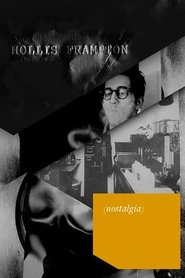
Michael Snow was considered one of Canada's most important artists, and one of the world's leading experimental filmmakers. His wide-ranging and multidisciplinary oeuvre explored the possibilities inherent in different mediums and genres, and encompassed film and video, painting, sculpture, photography, writing, and music. Snow's practice comprised a thorough investigation into the nature of perception. While Snow early established himself as a successful painter and musician in his native Toronto, it was his 1962 move to New York City that marked the beginning of his rise to international prominence. He entered into a long-lasting and fruitful dialogue with downtown Manhattan's artistic avant garde, exchanging ideas with figures such as Yvonne Rainer, Philip Glass, Sol LeWitt, and Richard Foreman, and developing of some of his most ambitious and influential works to date. His 1964 film New York Eye and Ear Control documents his growing involvement with the burgeoning free jazz movement, and the soundtrack boasts a lineup that includes Albert Ayler, Don Cherry, and Sonny Murray. Snow would continue to pursue improvised music, both on his own and in ensembles such as Toronto's CCMC. The generation and reception of sound in the broader sense emerged as one of his main concerns, reflected in performance and tape works that share qualities with contemporaneous experiments by composers like Steve Reich. At the same time, Snow made alliances within the underground film scene centered around Jonas Mekas' Filmmakers' Cinematheque, an experience that encouraged him to find ways to transfer his concerns with music and photography into the realm of the moving image. He assisted Hollis Frampton on films such as Nostalgia(1971), and it was legendary director Ken Jacobs whose loan of equipment helped Snow create his most famous and influential work, the groundbreaking 1967 film Wavelength. Wavelength, which notoriously includes a 45-minute camera zoom within a fixed frame, remains one of the most studied and admired works of structuralist filmmaking. Other of Snow's films of this period, including Back and Forth (1969) and La Région Centrale (1971) similarly explored the mechanics of filmmaking to simultaneously investigate the functional processes of cinema and of thinking itself. In the 1970s and 1980s, Snow, responding to a growing institutional commitment to his work, experimented more with large-scale installations, including public sculptures such as Flightstop (1979) and The Audience (1988-89). In recent years, he focused on the specific nature and potential of digital media, yielding works like the video-film *Corpus Callosum (2002). Regardless of artistic genre, Snow consistently engaged in an analytical discourse on the nature of consciousness and experience, language and temporality. He died on January 5th, 2023.